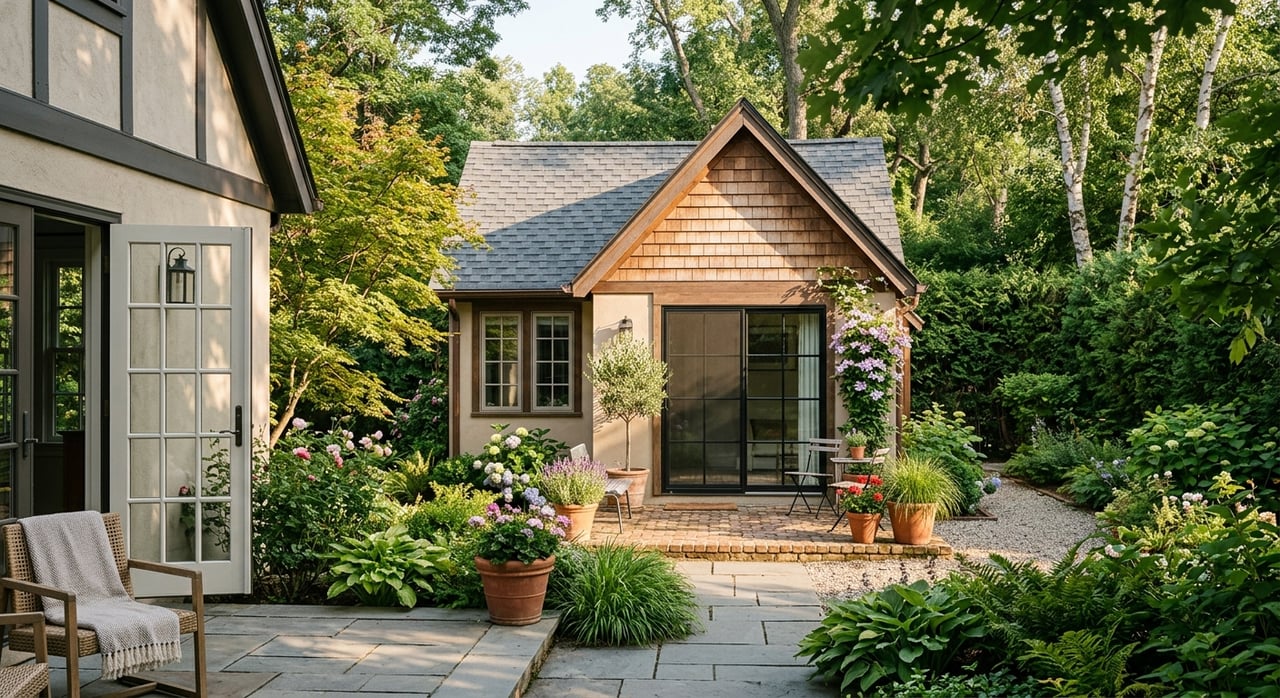
If you need more space for family but do not want to leave Castro Valley, an ADU could be one of the most practical options to consider. For many households, multigenerational living is about staying connected while still protecting privacy, routines, and independence. This guide walks you through how ADUs and JADUs work in Castro Valley, what local homeowners should expect from the process, and what to think about before you build. Let’s dive in.
Why ADUs matter in Castro Valley
Castro Valley is an unincorporated area, which means ADU questions usually go through Alameda County rather than a city planning department. If you are exploring this path, the Alameda County ADU Resource Center is one of the best places to start for county-specific guidance.
According to the California Department of Housing and Community Development, ADUs can support affordable housing, provide homeowner income, and help extended families live near one another with more privacy. For multigenerational households, that flexibility can be especially valuable when you want family nearby without sharing every part of daily life.
What counts as an ADU
An ADU is a secondary residential unit on the same lot as a primary home, with independent living facilities for sleeping, eating, cooking, and sanitation. In simple terms, it is a self-contained home on your property.
ADUs can take several forms, including:
- A detached backyard cottage
- An attached addition to the main house
- A conversion of interior space
- A conversion of an existing accessory structure, such as a garage
The California HCD ADU Handbook explains these statewide rules and definitions in detail.
How JADUs are different
A JADU, or junior accessory dwelling unit, is smaller and must be created within a single-family home. Under state guidance, a JADU can be up to 500 square feet, may share a bathroom or have its own, and can even be created from an attached garage.
One important difference is occupancy. A JADU still has an owner-occupancy requirement, meaning the owner must live in either the main home or the JADU. Standard ADUs do not carry that same local owner-occupancy requirement under current state rules.
Why multigenerational households choose ADUs
For many families, an ADU offers a middle ground between living apart and living under one roof. You can stay close to parents, adult children, or extended relatives while giving everyone more control over their own space.
That can be helpful for aging in place, caregiving, saving on housing costs, or creating a more flexible long-term family setup. Instead of relying on an improvised room conversion, an ADU is designed to function as a real home with more privacy and independence.
Castro Valley rules start with Alameda County
Because Castro Valley falls under county jurisdiction, local ADU planning starts with Alameda County rules. The county’s Local ADU Rules page confirms which standards apply in unincorporated communities like Castro Valley.
At a high level, state law protects a baseline detached ADU with four-foot side and rear setbacks and an 800-square-foot size floor. Conversions of existing living space or accessory structures are treated differently and are not subject to unit-size limits in the same way.
County guidance also notes that some properties may be able to have both an ADU and a JADU. Since parcel-specific details matter, it is smart to confirm the exact combination with county staff before you get too far into planning.
What the permit process looks like
The ADU approval process is meant to be ministerial, not discretionary. That means the review focuses on whether your plans meet the rules, rather than subjective judgment.
HCD says a completed ADU or JADU application must be approved or denied within 60 days. The permitting agency must also provide written notice about whether your application is complete within 15 business days.
In Alameda County, homeowners should expect to submit items such as:
- A site plan
- Building plans
- Structural plans
- Title 24 energy calculations, when required
- A deed restriction, when required
The county’s Permit page outlines application materials, timing, and fee categories.
How long an ADU project may take
ADUs can move faster than many other housing projects, but they still take planning. Alameda County says most ADU projects take about 12 to 18 months overall.
Within that timeline, planning often takes 1 to 3 months and permitting can take 1 to 6 months. Design, revisions, contractor scheduling, and construction all add time, so it helps to start with realistic expectations.
Design choices that help families live well
For multigenerational living, good design is about more than square footage. The best layouts often support both connection and separation, so daily life feels easier for everyone.
Useful features to think through include:
- A separate entry
- Clear circulation between the main home and the ADU
- Noise separation
- Practical storage
- Bathroom placement
- Accessibility for relatives who may age in place
The county’s Design page recommends working with an experienced design professional early. That can help you avoid costly revisions and create a layout that fits your property and your family’s real needs.
Utilities, parking, and site limits
Some of the biggest ADU questions are not about the building itself. They are about whether the site can support the project.
HCD notes that water and sewer capacity, utility connections, and related fees can affect feasibility. County guidance recommends checking with local staff and utility providers early so you understand any project constraints before finalizing your plans.
Parking rules are also more flexible than many homeowners expect. Under HCD guidance:
- Parking cannot exceed one space per unit or bedroom, whichever is less
- Tandem parking is allowed
- Replacement parking cannot be required when a garage, carport, covered parking structure, or uncovered parking space is removed for an ADU
Those rules can make garage conversions or compact-lot projects more workable than they may first appear.
Budget and financing considerations
Before you build, it is important to map out the financial side of the project. Alameda County says many homeowners use a mix of savings, family funds, home equity, and loans.
The county also recommends factoring in possible rental income when evaluating whether an ADU makes sense for your goals. If your plan is family use first, that income may not be immediate, but long-term flexibility can still matter.
The county’s Budget & Finance page also notes that ADUs can affect property taxes and income taxes. It is wise to speak with a tax advisor or financial professional before construction begins.
ADUs are a long-term housing strategy
If you are thinking about an ADU as a short-term rental play, county and state guidance are clear. ADUs and JADUs must be rented for terms longer than 30 days.
That means these units are better viewed as a long-term housing option, whether for family members, future flexibility, or stable rental use. The county’s Rent page explains the long-term rental framework and basic landlord considerations.
A smart first step for Castro Valley homeowners
If you are just starting your research, begin with the county resources and get a realistic picture of your lot, budget, and goals. The Alameda County ADU Resource Center includes step-by-step guidance, design resources, a budget calculator, and access to HelloADU technical assistance.
From there, think about how your household may use the space over time. A good ADU plan is not only about what your family needs today. It is also about how the property could support privacy, caregiving, rental flexibility, or aging in place in the years ahead.
If you are weighing whether a Castro Valley property has ADU potential, or you want guidance as you plan your next move, connect with Abelino Espinoza-Sanchez. You deserve clear, practical advice as you explore what multigenerational living could look like in the East Bay.
FAQs
What are the ADU rules for Castro Valley homeowners?
- Castro Valley is unincorporated, so ADU rules generally come through Alameda County. Homeowners can start with the Alameda County ADU Resource Center and Local ADU Rules page for county-specific guidance.
What is the difference between an ADU and a JADU in Castro Valley?
- An ADU is a full secondary residential unit with independent living facilities, while a JADU is a smaller unit, up to 500 square feet, created within a single-family home and subject to owner-occupancy rules.
How long does ADU permitting take in Alameda County?
- Under state guidance, a completed ADU or JADU application must be approved or denied within 60 days, and the agency must notify you within 15 business days if the application is complete.
Can you build an ADU for family members in Castro Valley?
- Yes, ADUs are commonly used to help extended families live on the same property with more privacy and independence, which can be helpful for caregiving, aging in place, or housing adult children or parents.
Can an ADU in Castro Valley be used as a short-term rental?
- No, Alameda County and California guidance state that ADUs and JADUs must be rented for terms longer than 30 days.
What should Castro Valley homeowners budget for an ADU?
- Costs vary by site conditions, design, utilities, and construction choices, so homeowners should review Alameda County budget resources early and plan financing before construction starts.
